As a restorer with two decades at the bench, I’ve seen this scenario more times than I can count. When leather gets soaked—whether from a forgotten sunroof or a spill—and is then met with aggressive dehumidification, a “flash-drying” event occurs. This process doesn’t just evaporate surface moisture; it forcibly extracts the essential fatliquors (internal oils) from the hide’s protein fibers. This causes the fibers to shrink, stiffen, and essentially lock together.
Physical Symptoms of Dehydrated Leather
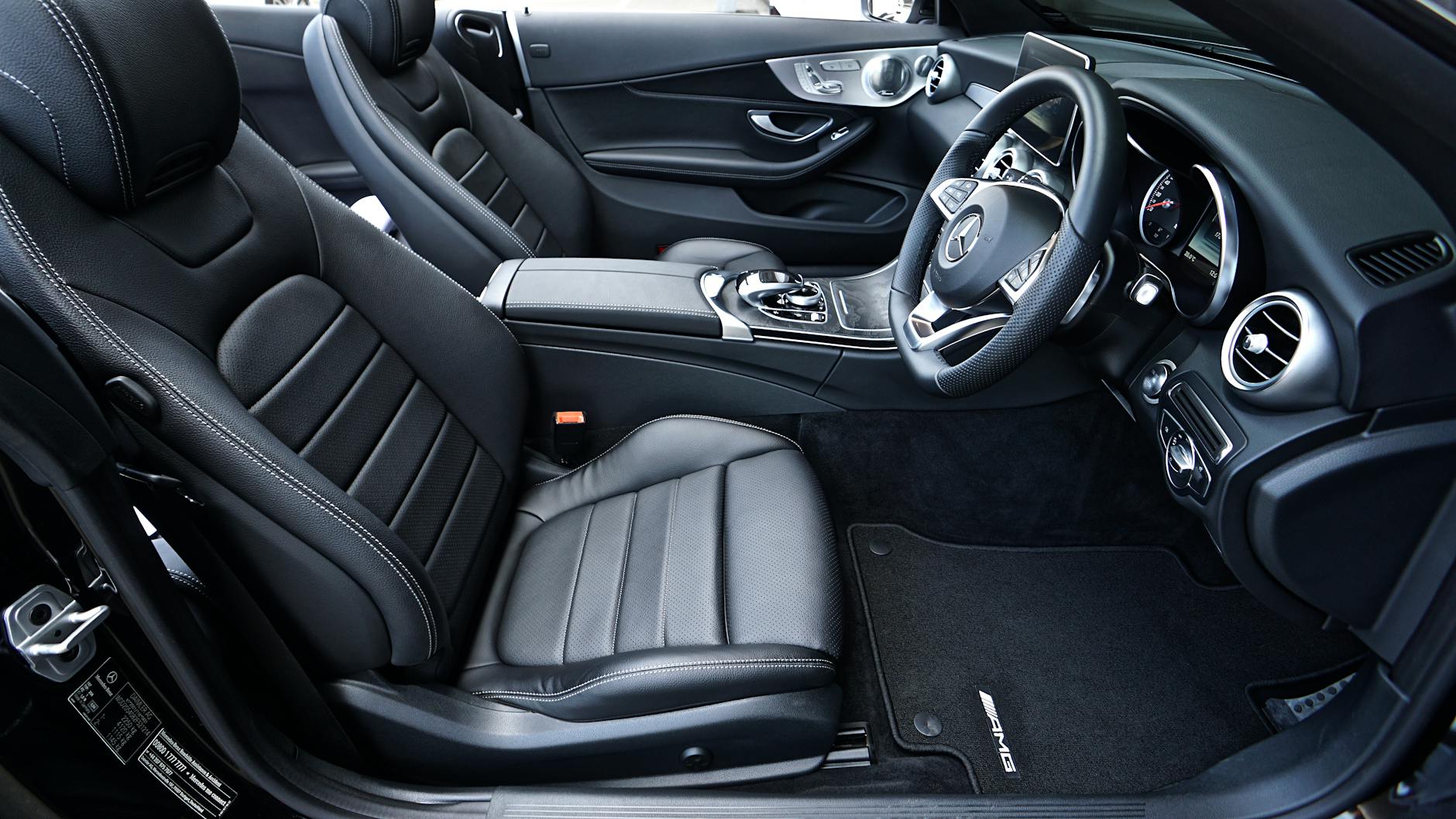
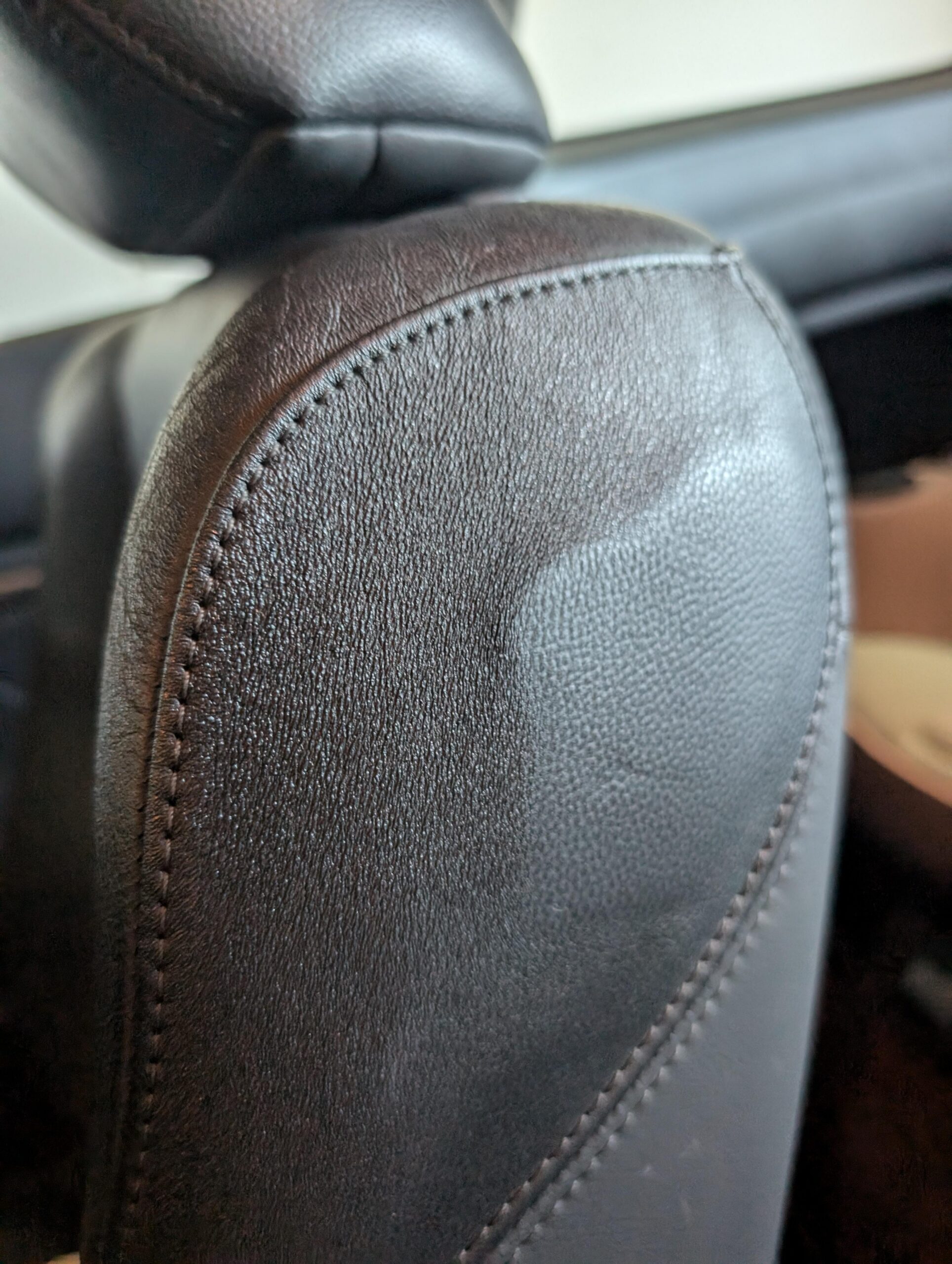
Before reaching for products, you need to identify exactly how the hide has reacted. In my shop, we look for four primary indicators of flash-drying damage:
- Surface Rigidity: The leather feels “cardboard-like” or stiff. When you tap it, it sounds hollow rather than muffled.
- Texture Contrast: You will see a distinct transition line where the leather has tightened. This is often most visible between the seat face and the side bolsters.
- Loss of Drape: The leather no longer follows the curves of the seat foam. It appears pulled taut, like a drum skin, rather than conforming to the bolster shape.
- Tactile Friction: Sliding your hand across the surface produces a “raspy” or “scratchy” sound. This indicates the polyurethane top coat is parched and becoming brittle.
Understanding the Root Cause
To fix the leather, you have to understand why it failed. Most modern automotive leathers are chrome-tanned and finished with a protective coating. When rainwater enters the fiber bundle, it displaces the lubricants. As your dehumidifier pulled the water out, it acted as a vacuum, carrying those lubricants to the surface where they evaporated or were wiped away. Without these internal oils, the microscopic collagen fibers “Velcro” together, preventing the hide from flexing. Furthermore, the clear protective layer loses its moisture content, making it highly susceptible to cracking under mechanical stress.
Bench Tests and Diagnostics
Before starting the restoration protocol, perform these two industry-standard tests to gauge the severity of the fiber lock.
The Thumb Press Test
Press your thumb firmly into the center of the stiffest area. If it forms soft, radiating wrinkles that disappear the moment you release pressure, the damage is likely superficial. However, if it forms sharp, “shattered” looking creases or resists indentation entirely, the internal fiber structure is severely dehydrated.
The Absorbency Check
Place a single drop of water on a seam or a perforated area. If the water sits on top indefinitely, the factory finish is still sealed. If it soaks in within 30 seconds, the leather is “thirsty” and will accept conditioners and fatliquors readily through the capillary action of the fibers.
The Restoration Protocol
Follow these steps in order. Do not rush the dwell times; leather restoration is a game of patience.
- Gentle Re-Hydration: Do not start with heavy oils. Wipe the seats with a warm, damp (not dripping) microfiber cloth. This introduces a controlled amount of moisture to “open” the finish and prepare the fibers.
- pH-Neutral Cleaning: Use a dedicated automotive leather cleaner. This removes any minerals or contaminants left behind by the rainwater that could interfere with the conditioning step.
- Deep Conditioning (The “Massage” Method): Apply a high-quality, water-based leather conditioner. Avoid products containing silicone or heavy waxes, as these sit on top and clog the pores. The Secret: You must physically work the product in. Use the heels of your hands to massage the leather, flexing the stiff areas to break the fiber bonds.
- The Plastic Wrap Technique: For areas of extreme stiffness, apply a generous layer of conditioner, then cover the area with plastic cling wrap for 2 to 4 hours. This creates a “micro-sauna” effect, preventing evaporation and forcing the moisture back into the hide.
- Buff and Rest: Wipe off any excess product with a clean cloth. Let the seat sit for 24 hours in a temperate environment (around 70°F) without a dehumidifier to allow the internal oils to stabilize.
Professional Cautions and Friction Points
Even seasoned pros can trip up on these specific North American climate and material realities:
- Avoid Heat: Never use a hair dryer or heat gun to speed up the process. Excessive heat will permanently “cook” the protein fibers—a process called denaturation—which is irreversible.
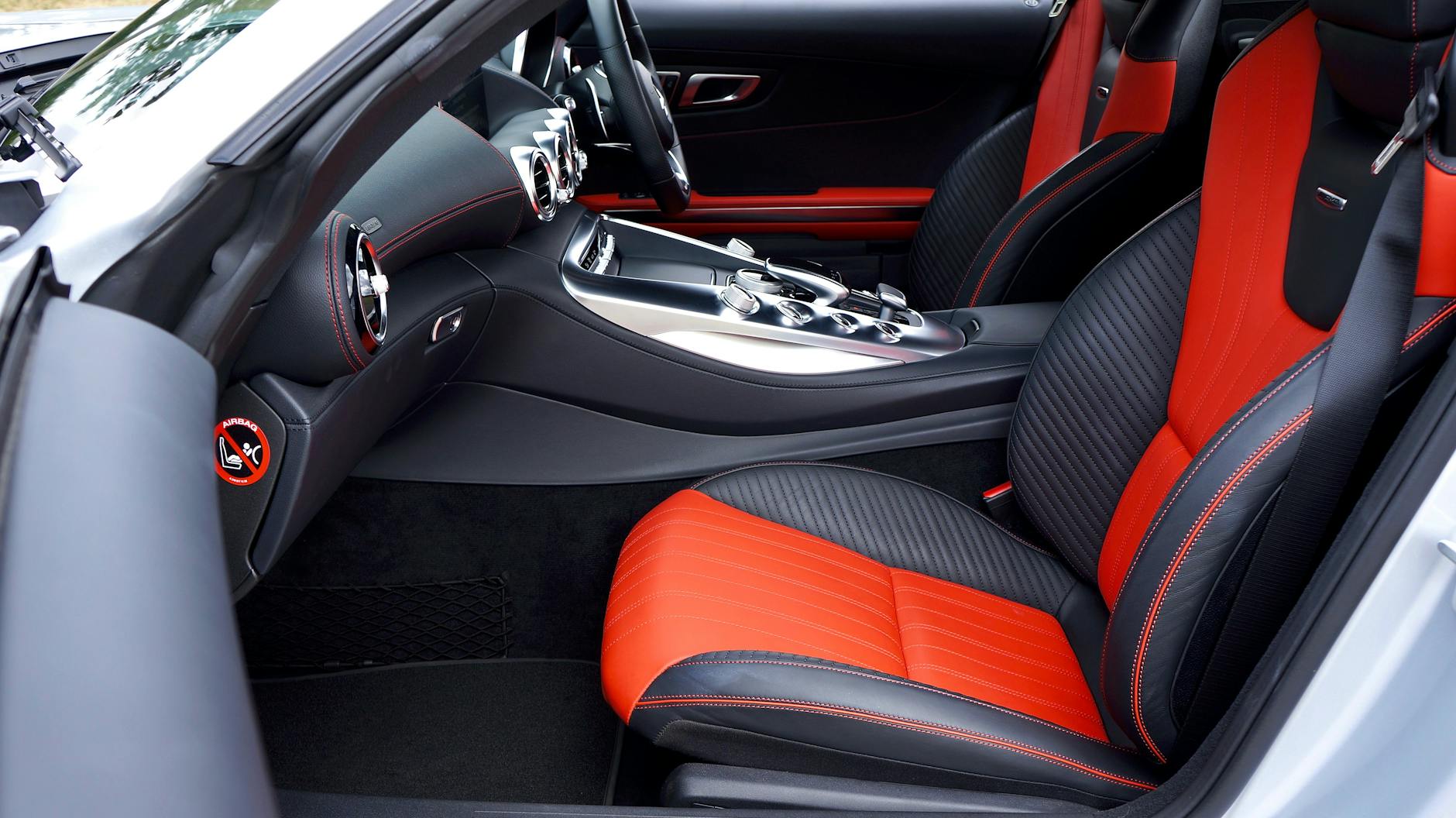
- Perforation Risk: If your seats are perforated for heating or cooling, do not apply conditioner directly to the seat. Apply it to your cloth first. Clogging these holes can lead to mold growth inside the seat foam and can damage the electronic blower motors.
- Over-Conditioning: More is not always better. If the leather feels greasy or “mushy” after 24 hours, you’ve over-saturated it. This can weaken the glue bonds holding the leather to the seat frame.
- The Point of No Return: If the leather has physically shrunken (e.g., the seams are pulling apart or the leather is 1/2 inch shorter than the frame), it cannot be stretched back. At this stage, the fiber structure is permanently altered, and the only solution is a professional panel replacement.